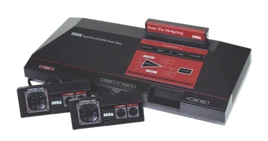


A Forgotten Sports Gem on Sega’s 8-Bit Stage
Released during the formative years of Sega’s 8-bit ecosystem, Great Volleyball (Japan) stands as one of the more interesting entries in the company’s early sports lineup for the Master System Mark III. At a time when football, baseball, and tennis games dominated the market, Sega took a chance on volleyball, delivering a fast-paced simulation that captured the rhythm and strategy of the sport surprisingly well for its era.
Developed and published by Sega in the late 1980s, the game arrived during a period when the company was aggressively building a library capable of competing against Nintendo's growing dominance. While it never achieved the widespread recognition of some of Sega's flagship sports titles, Great Volleyball demonstrated that the Master System hardware could handle team-based athletic competition with responsive controls and engaging gameplay.
Today, retro enthusiasts revisit the game not only as a piece of Sega history but also as a fascinating example of how developers translated a complex sport into an accessible 8-bit experience.
Great Volleyball (Japan): Sega’s Unique Take on Competitive Volleyball
Unlike many sports games of the period that simplified mechanics to the point of abstraction, Great Volleyball attempts to recreate the flow of an actual match. Players must coordinate serves, passes, sets, blocks, and spikes while managing positioning across the court.
The gameplay revolves around timing. Successful attacks require precise execution, and a mistimed jump can result in a missed spike or failed block. This emphasis on rhythm gives the game a surprisingly tactical feel.
Several gameplay elements help distinguish it from other sports titles of the era:
- Three-touch offensive sequences that mimic real volleyball strategies.
- Defensive positioning mechanics requiring anticipation rather than pure reaction.
- Different serve techniques that influence ball trajectory.
- Competitive AI opponents capable of exploiting player mistakes.
- Multiplayer support that significantly enhances replay value.
While modern volleyball games feature advanced physics systems, Great Volleyball succeeds through elegant simplicity. Every action feels immediate, making victories satisfying and mistakes easy to understand.
Mastering the Court: Gameplay Depth Beyond Expectations
Learning the Fundamentals
New players often underestimate the game's depth. At first glance, it appears straightforward: return the ball and score points. However, experienced players quickly discover the importance of timing windows and court awareness.
The game rewards proper positioning before the ball arrives. Instead of relying solely on reflexes, players must read the opponent's intentions and move accordingly.
Offensive Strategy
Spiking is the most exciting aspect of the game. Well-executed attacks can overwhelm defenders and create scoring opportunities. The challenge lies in setting up these plays effectively.
Advanced players learn to vary attack angles and exploit defensive gaps. The AI can react surprisingly well, forcing competitors to think strategically rather than repeating the same attack pattern.
Defensive Play
Blocking and receiving form the backbone of successful defense. Reading the opposing team's setup becomes essential during higher-level play. Defensive rallies can become surprisingly tense, especially in closely contested matches.
This balance between offense and defense gives Great Volleyball a level of longevity that many contemporary sports titles lack.
Pushing the Mark III Hardware
Sports games often served as technical showcases during the 8-bit era, and Great Volleyball is no exception. While the Master System Mark III could not match arcade hardware, Sega's developers extracted impressive results from the platform.
Visual Presentation
The player sprites are large and easy to identify, helping maintain readability during fast rallies. Character animations effectively communicate movement and jumping actions despite limited memory resources.
Like many games from the period, occasional sprite flickering appears when multiple athletes occupy the same section of the screen. However, the effect remains relatively minor and rarely impacts gameplay.
The court itself is colorful and clearly defined, making ball tracking straightforward even during rapid exchanges.
Audio Design
The soundtrack delivers energetic sports-themed melodies that complement the action without becoming distracting. Sound effects are simple but effective, providing clear feedback during serves, spikes, and successful blocks.
The audio package helps create an atmosphere that feels competitive despite the hardware limitations.
Playing Great Volleyball Today Through Emulation
Modern emulation has made preserving Master System titles easier than ever, and Great Volleyball benefits tremendously from contemporary hardware.
Recommended Emulators
- Genesis Plus GX for highly accurate Master System emulation.
- RetroArch with Genesis Plus GX core.
- Meka for enthusiasts seeking classic Master System-focused emulation.
- BizHawk for advanced recording and tool-assisted analysis.
Best Settings for Modern Displays
When playing on a modern monitor or television, several adjustments can significantly improve image quality:
- Enable integer scaling for authentic pixel ratios.
- Use low-latency settings to minimize input lag.
- Disable excessive smoothing filters.
- Apply CRT shaders for a period-correct appearance.
- Use save states for practice and experimentation.
At 4K resolution, sprite artwork remains remarkably clean thanks to the game's straightforward visual design. CRT shaders can further enhance authenticity by recreating scanlines and phosphor glow.
Steam Deck and Odin Performance
Great Volleyball runs flawlessly on handheld devices such as the Steam Deck and Odin series. Since Master System emulation requires minimal processing power, players can expect perfect frame rates, excellent battery life, and near-instant loading.
The portable format is particularly well suited to short competitive matches, making the game an excellent travel companion for retro enthusiasts.
The Legacy of an Overlooked Sega Sports Title
Although it never became one of Sega's most celebrated releases, Great Volleyball occupies an important place in the company's sports catalog. It demonstrated the versatility of the Master System and showed that less mainstream sports could thrive in video game form.
Many later volleyball titles would expand upon concepts introduced during this era, incorporating more advanced physics and deeper team management systems. Yet the accessible arcade-style foundation seen here remains recognizable.
Retro gaming communities continue to appreciate the title for its pick-up-and-play nature, balanced mechanics, and historical significance within Sega's early lineup.
For preservationists and collectors, it remains an enjoyable reminder of a period when developers experimented freely with sports genres that were rarely represented in home gaming.
Frequently Asked Questions
What is the best way to play Great Volleyball today?
Using RetroArch with the Genesis Plus GX core offers excellent compatibility, low input lag, save states, and modern display enhancements.
Does Great Volleyball suffer from graphical glitches in emulation?
Most modern emulators run the game accurately. If visual issues appear, verify the correct Master System region settings and use an updated emulator core.
Can Great Volleyball be played in 4K?
Yes. The game scales exceptionally well through modern emulators. Integer scaling and CRT shaders typically provide the best results on high-resolution displays.
Is Great Volleyball difficult for new players?
The basics are easy to learn, but mastering timing, positioning, and advanced offensive strategies requires practice. This balance of accessibility and depth is one reason the game remains enjoyable decades after its release.


