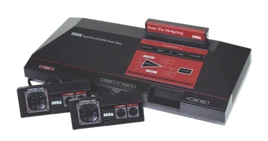


Paperboy (Europe): Delivering Arcade Chaos to the Master System
Few games capture the quirky spirit of 1980s arcade gaming quite like Paperboy (Europe). Released for Sega's Master System, this adaptation of Atari's arcade hit transformed the simple act of delivering newspapers into one of the most memorable and challenging experiences of the 8-bit era. Combining fast reflexes, environmental hazards, and a surprising amount of strategy, Paperboy became a standout title that proved unique concepts could be just as exciting as traditional action or platform games.
Originally developed by Atari Games and adapted for home systems during the late 1980s, Paperboy arrived at a time when arcade conversions were a major selling point. While many ports struggled to recreate their arcade counterparts, the Master System version delivered a remarkably faithful interpretation that showcased Sega's capable hardware. For European players in particular, it became one of the system's most recognizable arcade conversions.
Paperboy (Europe) and the Art of Newspaper Delivery
The premise sounds deceptively simple: ride a bicycle down a suburban street and deliver newspapers to subscribers. In practice, however, Paperboy turns this everyday task into an obstacle course filled with chaos and unexpected dangers.
Players guide the titular paperboy through seven consecutive delivery days. Houses belonging to subscribers must receive newspapers accurately thrown onto porches, into mailboxes, or through open doors. Missing deliveries risks losing subscribers, while successful throws increase your chances of completing the week.
What makes the game special is the constant stream of hazards. The streets are packed with:
- Remote-controlled cars racing across sidewalks.
- Dogs chasing the player.
- Skateboarders weaving through traffic.
- Unexpected road construction.
- Tornadoes and other bizarre environmental threats.
- Vehicles entering driveways without warning.
The result is a game that rewards memorization and quick reactions. Every run feels unpredictable despite following the same neighborhood layout. The challenge comes from balancing precision newspaper throws while navigating an increasingly dangerous environment.
Training Course and Skill Development
Between delivery days, players enter a dedicated obstacle course. This practice area allows them to improve throwing accuracy while avoiding ramps, barriers, and moving objects. The training stage serves as both a bonus round and a welcome opportunity to recover lost subscribers.
This structure was innovative for its time, introducing a progression system that encouraged players to refine their skills rather than simply chase high scores.
Mastering the Streets: Gameplay Depth Beneath the Humor
At first glance, Paperboy appears whimsical and straightforward. Underneath the humor lies a surprisingly demanding arcade design.
The game constantly asks players to divide their attention between multiple objectives. Looking ahead helps avoid collisions, while monitoring house locations ensures newspapers reach the correct targets. This split-second decision-making creates a level of tension rarely found in other Master System titles.
Successful players learn optimal delivery angles and memorize the position of dangerous obstacles. Veteran fans often develop efficient routes that minimize risk while maximizing subscriber retention.
The game's difficulty curve is unforgiving. By the later days, the neighborhood becomes increasingly hostile, forcing players to rely on pattern recognition and precise timing. This challenge remains one of the primary reasons Paperboy retains a dedicated fanbase decades later.
Technical Achievements on Sega's 8-Bit Hardware
The original arcade machine used an isometric perspective that was relatively uncommon at the time. Translating that viewpoint to the Master System required careful optimization.
The developers successfully recreated the distinctive diagonal scrolling neighborhood while maintaining responsive controls. Considering the hardware limitations, this was a notable technical accomplishment.
Highlights of the Master System version include:
- Smooth scrolling environments.
- Large, recognizable character sprites.
- Faithful recreation of the arcade's suburban atmosphere.
- Fast input response essential for accurate newspaper throws.
- Minimal slowdown despite multiple moving objects on screen.
Some sprite flickering occurs during particularly busy moments, a common characteristic of many 8-bit systems. However, it rarely impacts gameplay. The colorful neighborhood environments help maintain visual clarity even during chaotic sequences.
Audio is equally memorable. The upbeat soundtrack and humorous sound effects complement the game's lighthearted tone while providing useful feedback during deliveries and collisions.
Playing Paperboy Today Through Emulation
Modern emulation offers the best way to experience Paperboy on contemporary hardware. The Master System version runs exceptionally well on several popular emulators.
Recommended Emulator Settings
- Enable accurate VDP timing for proper scrolling behavior.
- Use integer scaling to preserve pixel sharpness.
- Activate low-latency settings to reduce input lag.
- Maintain the original aspect ratio for authentic presentation.
- Use save states sparingly if seeking an arcade-accurate challenge.
Popular emulators such as Kega Fusion, BizHawk, RetroArch with Genesis Plus GX, and Mesen2 handle the game with excellent compatibility.
4K Upscaling and Modern Handhelds
When upscaled to 4K, Paperboy's colorful sprites remain surprisingly attractive. Sharp scaling filters preserve the clean pixel art, while CRT shaders can recreate the appearance of a vintage television.
The game performs flawlessly on modern handheld devices including the Steam Deck, Ayn Odin series, and Android-based retro gaming systems. Because the hardware requirements are minimal, users can enable advanced visual enhancements without sacrificing performance.
If graphical artifacts appear, disabling aggressive texture filtering usually restores the intended visual style. Unlike modern 3D games, Paperboy benefits most from faithful pixel scaling rather than artificial smoothing.
The Lasting Legacy of a Suburban Classic
Paperboy remains one of gaming's most original arcade concepts. While countless titles focused on combat, racing, or platforming, Paperboy built an entire game around newspaper delivery and transformed it into an unforgettable challenge.
The franchise eventually received sequels and ports across numerous platforms, helping cement its place in gaming history. Its unusual premise inspired later games that embraced everyday activities and turned them into entertaining gameplay systems.
The speedrunning community continues to explore optimal delivery routes, subscriber management strategies, and score-maximizing techniques. Competitive players still chase perfect weeks and high-score records decades after release.
For retro gaming enthusiasts, Paperboy represents a snapshot of an era when developers were willing to experiment with unconventional ideas. Its combination of arcade action, humor, and skill-based gameplay remains as compelling today as it was during the Master System's heyday.
Frequently Asked Questions
What is the best version of Paperboy to play today?
The Master System version remains an excellent choice thanks to its faithful gameplay, responsive controls, and strong emulation support. Many retro enthusiasts consider it one of the better 8-bit conversions.
Does Paperboy run well on Steam Deck?
Yes. The game runs flawlessly through RetroArch and other emulators on Steam Deck, offering excellent battery life and near-zero performance concerns.
How do I reduce input lag when emulating Paperboy?
Enable run-ahead features where available, use a low-latency video driver, and disable unnecessary graphical processing. These settings help maintain arcade-like responsiveness.
Are save states recommended for Paperboy?
Save states are useful for practice and learning difficult sections. However, playing without them delivers the authentic arcade experience and preserves the game's intended challenge.


