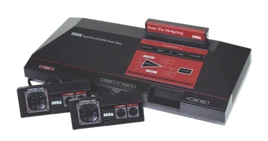


Ahead of Its Time: Sega's Forgotten Soccer Innovation
Few sports games from the 8-bit era experimented with hardware as boldly as Sports Pad Soccer (Japan) (En). Released for the Sega Mark III, the Japanese predecessor to the Master System, this unique soccer title was designed around Sega's ambitious Sports Pad controller rather than the standard directional pad. At a time when most football games offered simple movement and limited tactical depth, Sports Pad Soccer delivered a surprisingly responsive and arcade-like experience that showcased what alternative control methods could achieve on home consoles.
While the game never reached the mainstream popularity of later soccer franchises, it remains a fascinating piece of Sega history. For collectors, preservationists, and retro gaming enthusiasts, Sports Pad Soccer represents an era when developers were willing to rethink how players interacted with sports simulations entirely.
Sports Pad Soccer (Japan) (En): A Showcase for Sega's Experimental Hardware
Released during the late 1980s, Sports Pad Soccer was developed and published by Sega as part of its effort to demonstrate the capabilities of the Sports Pad accessory. Unlike a traditional controller, the Sports Pad featured a trackball-inspired mechanism that translated physical movement into precise on-screen control.
The game was built specifically around this concept. Rather than treating the Sports Pad as an optional gimmick, the entire gameplay experience was designed to take advantage of rapid directional changes and fluid movement. This approach made Sports Pad Soccer feel more like an arcade cabinet brought into the living room than a conventional console sports title.
In many ways, the game anticipated the analog control revolution that would arrive years later with systems such as the Nintendo 64, Dreamcast, and PlayStation.
A Unique Place in Sega's History
During the Master System era, Sega frequently experimented with accessories. The company released the Light Phaser, SegaScope 3-D Glasses, and Sports Pad to distinguish its hardware from competitors. Sports Pad Soccer stands as one of the strongest examples of software specifically engineered around one of these peripherals.
Because of this, the game occupies a unique niche within the Master System library and remains an important artifact for those interested in gaming hardware innovation.
Mastering the Pitch: Gameplay That Rewards Precision
At first glance, Sports Pad Soccer resembles many top-down soccer games from the late 1980s. However, once players take control, the differences become immediately apparent.
Movement Built Around Momentum
The Sports Pad controller allows players to accelerate rapidly across the field. Instead of tapping a directional pad repeatedly, movement feels smooth and continuous. Skilled players can execute quick turns, burst through defensive gaps, and react to changing situations with remarkable speed.
This creates a stronger sense of momentum than many contemporary soccer games, where players often felt locked into rigid movement patterns.
Passing and Offensive Strategy
Successful attacks require careful planning and quick decision-making. Passing windows appear briefly, forcing players to read the field and react instantly.
The game's faster movement system encourages dynamic offensive play. Building attacks through quick passes and strategic positioning becomes far more rewarding than simply charging toward the goal.
Defensive Challenges
Defense demands anticipation rather than brute force. Because attackers can change direction rapidly, defenders must predict movement patterns and cut off passing lanes.
This creates surprisingly tense matches where positioning and timing matter as much as raw reflexes.
Technical Achievements on the Master System Mark III
From a technical perspective, Sports Pad Soccer demonstrates how much Sega's developers could accomplish with limited 8-bit hardware.
Responsive Input Processing
Perhaps the most impressive achievement is the game's responsiveness. The Mark III hardware had to process rapid Sports Pad inputs while maintaining smooth gameplay and stable performance.
The developers succeeded in creating controls that feel immediate and precise, minimizing the sluggishness often associated with early sports simulations.
Clean Visual Design
The game's graphics prioritize readability. Players are clearly distinguishable, the field markings remain visible, and important gameplay information is easy to track.
Some sprite flickering can occur when multiple athletes occupy the same area of the screen, a common limitation of the era, but it rarely disrupts gameplay.
Sound Effects and Match Atmosphere
The Master System's PSG sound chip provides energetic sound effects and catchy musical themes. While the audio lacks the realism of later soccer games, it effectively captures the excitement of a competitive match.
The presentation feels distinctly arcade-inspired, helping the game maintain its fast-paced identity.
Playing Sports Pad Soccer Today Through Emulation
Thanks to modern emulation, Sports Pad Soccer is easier to experience today than it has been in decades. Proper configuration is essential, however, because the original game was designed around specialized hardware.
Best Emulators for Accurate Play
- Genesis Plus GX — Outstanding Sports Pad support and excellent Master System accuracy.
- RetroArch — Flexible configuration options and numerous enhancement features.
- Meka — One of the most respected Master System emulators available.
- BizHawk — Excellent for controller experimentation and gameplay analysis.
Recommended Emulator Settings
- Enable Sports Pad emulation rather than standard controller mode.
- Map controls to a mouse, trackpad, or analog stick.
- Use low-latency settings to reduce input lag.
- Enable integer scaling for crisp pixel output.
- Utilize save states for practice and preservation.
If player movement feels erratic, verify that the emulator is configured to recognize Sports Pad input. Many issues stem from using standard controller profiles instead of accessory emulation.
Steam Deck, Odin, and 4K Enhancements
The Steam Deck offers one of the best modern ways to experience Sports Pad Soccer thanks to its integrated trackpads, which closely mimic the original controller's feel. Odin handheld devices also provide an excellent experience through analog stick mapping.
When upscaled to 4K, the game's pixel art remains surprisingly attractive. Modern CRT shaders can recreate scanlines, phosphor glow, and subtle display curvature while preserving sharp image quality. Combined with reduced frame buffer latency and modern displays, the game often feels smoother than it did on original hardware.
The Legacy of a Forgotten Soccer Pioneer
Sports Pad Soccer never evolved into a major franchise, but its importance extends beyond sales figures. The game demonstrated that alternative control schemes could fundamentally change how sports games felt to play.
Many of the concepts explored through the Sports Pad would later reappear in analog-stick sports games throughout the 1990s and early 2000s. While no direct sequel emerged, the title remains a compelling example of Sega's willingness to innovate.
Today, the game enjoys a small but passionate following among Master System collectors, preservationists, and hardware enthusiasts. Its rarity and unusual controller requirements make it one of the more intriguing discoveries within Sega's extensive catalog.
Frequently Asked Questions
What makes Sports Pad Soccer (Japan) (En) different from other soccer games on the Master System?
The game was specifically designed for the Sports Pad controller, offering trackball-style movement that provides greater precision and responsiveness than standard D-pad controls.
Can I play Sports Pad Soccer (Japan) (En) without an original Sports Pad?
Yes. Modern emulators allow players to map Sports Pad functionality to a mouse, trackpad, or analog stick while maintaining the intended gameplay experience.
How do I fix control issues in Sports Pad Soccer (Japan) (En)?
Ensure Sports Pad emulation is enabled in your emulator settings. Most movement problems occur when the game is configured to use a standard controller profile.
What is the best version of Sports Pad Soccer (Japan) (En) to play today?
The original Japanese release running through Genesis Plus GX or RetroArch with accurate Sports Pad emulation provides the most authentic experience while benefiting from save states, low-latency options, and modern display enhancements.


